Laurie Santos: A monkey economy as irrational as ours | Video on TED.com
Fascinating talk looking at financial behaviour by monkeys & how similar it is to humans (for example loss aversion).
Showing posts with label evolution. Show all posts
Showing posts with label evolution. Show all posts
Tuesday, January 4, 2011

Monday, January 3, 2011
Natural selection

Natural selection
Monday, November 1, 2010
People I would have liked to have met, but it's too late now: Leigh Van Valen
"Stomp your feet, crack your tail, 6.6 on the Richter scale!"

Who wouldn't want to meet the guy like Leigh Van Valen who wrote these words to "Sex Among the Dinosaurs?" Or someone who provides insight into evolution through comparisons to Alice and the Red Queen? Well, unfortunately he died on Oct. 16, which I read about in a whimsically written NY Times obit on Sunday.
All things evolution have fascinated me since 10th grade biology and Darwin's theory and way of thinking has been a lynchpin of the way I approach many issues beyond the narrow frame of science. I haven't read as much as I should, though I have a stack of books sitting around waiting. I even remember when there were some shenanigans in Kansas over evolution telling Randi that we have to push back on basic issues such as this.
Van Valen was an out of the box thinker and there are no more stimulating people. I had never heard of him until yesterday but I hope to add some of his writings if available (he never wrote a book) to my pile.
With up to 70% of the Tea Party crowd not believing in evolution, I better get Van Valen's stuff before tomorrow's election after which we just may see a large bonfire on Capitol Hill.
Who wouldn't want to meet the guy like Leigh Van Valen who wrote these words to "Sex Among the Dinosaurs?" Or someone who provides insight into evolution through comparisons to Alice and the Red Queen? Well, unfortunately he died on Oct. 16, which I read about in a whimsically written NY Times obit on Sunday.
All things evolution have fascinated me since 10th grade biology and Darwin's theory and way of thinking has been a lynchpin of the way I approach many issues beyond the narrow frame of science. I haven't read as much as I should, though I have a stack of books sitting around waiting. I even remember when there were some shenanigans in Kansas over evolution telling Randi that we have to push back on basic issues such as this.
Van Valen was an out of the box thinker and there are no more stimulating people. I had never heard of him until yesterday but I hope to add some of his writings if available (he never wrote a book) to my pile.
With up to 70% of the Tea Party crowd not believing in evolution, I better get Van Valen's stuff before tomorrow's election after which we just may see a large bonfire on Capitol Hill.
Sunday, September 12, 2010
You say you want evolution?
This essay argues for taking an evolutionary approach to, well, everything and has a pop at both neo-classical and behavioural economics in the process.
Monday, December 28, 2009
Evolution
When you read Beauty for Truth's Sake, you won't find much about evolution, except by implication. I mentioned this omission before, in an earlier posting triggered by a letter in the Catholic Herald. My own summary article about evolution is online here. Ignatius Press have a site dedicated to this question, called IntelligentProject.net, and they select the following passage from Pope Benedict, which goes to the heart of the question:
Christianity is faith in the Creator Spiritus, from whom comes everything that is real. Precisely this ought to give Christianity its philosophical power today, since the problem is whether the world comes from an irrational source, so that reason would be nothing but a "by-product" (perhaps even a harmful by-product) of the development of the world, or whether the world comes from reason, so that its criterion and its goal is reason. The Christian faith opts for this second thesis and has good arguments to back it up, even from a purely philosophical point of view, despite the fact that so many people today consider the first thesis the only "rational" and modern view. A reason that has its origin in the irrational and is itself ultimately irrational does not offer a solution to our problem. Only that creative reason which has manifested itself as love in the crucified God can truly show us what life is.There is no question here of setting faith against reason. But the point about evolution is that it tends to transmogrify into "evolutionism", a Theory of Everything that purports to explain even religious faith as the product of material forces. If the evolution of species is more than just a theory, this ideology of evolutionism is less than a theory; it is an hypothesis, and a poorly grounded one. People believe it mainly for the reason that they cannot see any alternative type of explanation as even possible. More on this phenomenon another time.
Evolution
When you read Beauty for Truth's Sake, you won't find much about evolution, except by implication. I mentioned this omission before, in an earlier posting triggered by a letter in the Catholic Herald. My own summary article about evolution is online here. Ignatius Press have a site dedicated to this question, called IntelligentProject.net, and they select the following passage from Pope Benedict, which goes to the heart of the question:
Christianity is faith in the Creator Spiritus, from whom comes everything that is real. Precisely this ought to give Christianity its philosophical power today, since the problem is whether the world comes from an irrational source, so that reason would be nothing but a "by-product" (perhaps even a harmful by-product) of the development of the world, or whether the world comes from reason, so that its criterion and its goal is reason. The Christian faith opts for this second thesis and has good arguments to back it up, even from a purely philosophical point of view, despite the fact that so many people today consider the first thesis the only "rational" and modern view. A reason that has its origin in the irrational and is itself ultimately irrational does not offer a solution to our problem. Only that creative reason which has manifested itself as love in the crucified God can truly show us what life is.There is no question here of setting faith against reason. But the point about evolution is that it tends to transmogrify into "evolutionism", a Theory of Everything that purports to explain even religious faith as the product of material forces. If the evolution of species is more than just a theory, this ideology of evolutionism is less than a theory; it is an hypothesis, and a poorly grounded one. People believe it mainly for the reason that they cannot see any alternative type of explanation as even possible. More on this phenomenon another time.
Thursday, October 15, 2009
Theories of Evolution
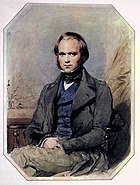
A letter published in The Catholic Herald points out that in my analysis of the challenge of evangelization in that paper (October 2), I ignored the "elephant in the room", namely Evolution. It says that my piece was "fine as far as it goes, but, like so many Catholic commentators on the decline of belief in this country, he is either unable or unwilling to take the necessary final step and identify the elephant in the room: namely, the Darwinian world-view that underpins our secular culture." It continues:
As Mr Caldecott says, we have lost a sense of who we are and how we fit into the cosmos. There is no mystery about why this has occurred: it follows naturally from the Darwinian view that we are merely the product of blind forces, rather than the deliberate creation of a loving God. The key is not, as he suggests, to highlight the complementary relationship of the arts and sciences, their common search for beauty, and the attraction of elegant solutions that please the heart: much of Darwinism’s superficial attraction lies in the fact that it appears to satisfy all these criteria, while clearly leaving no room for religious belief. Rather, we should be highlighting the latest research in such diverse fields as information theory, biochemistry and cosmology, which provide compelling evidence for traditional Catholic teaching on mankind’s unique status within God’s creation. Until we (and the Church generally) grasp this nettle, it will not matter one jot how many “humane and intelligent alternatives to the increasingly oppressive secularism of our schools” are devised: our children will continue to regard religious belief as fundamentally irrational.I don't entirely agree. In an article called "Theories of Evolution" I suggest that Darwin does leave room for religious belief. We do not have to take Richard Dawkins at face value, nor ignore the presence of respected theistic evolutionists such as Simon Conway-Morris (Cambridge). Darwin himself seems to have lost his faith for other reasons than the theory of natural selection. Atheistic evolutionism is a symptom and result of the split in our culture that I was writing about in that article and in my book - the three-way split between science, art, and faith. Unfortunately the debate on evolution too often gets bogged down in the discussion of atheism vs creationism or intelligent design. It needs to be broadened out, with reference also to psychology, neurophysiology, the nature of the soul and the human person. Religious believers have nothing to fear from facts discovered by modern science, although we must be wary of some of the interpretations that may be placed upon them.
Materialist theories of evolution in fact make sense only to people who lack a sense of spiritual forms or essences. If that whole dimension is closed to our minds, if there is no conception of what might be meant by “vertical causation” (formal and final causes working together with material and efficient ones), then naturally there is nowhere else for species to come from than below, through a combination of chance and necessity. The successive temporal unfolding of species does not prove the truth of the theories that are adduced to explain it. The inner form that makes a species what it is exists eternally, however it comes to be manifested in space and time.
Theories of Evolution
A letter published in The Catholic Herald points out that in my analysis of the challenge of evangelization in that paper (October 2), I ignored the "elephant in the room", namely Evolution. It says that my piece was "fine as far as it goes, but, like so many Catholic commentators on the decline of belief in this country, he is either unable or unwilling to take the necessary final step and identify the elephant in the room: namely, the Darwinian world-view that underpins our secular culture." It continues:
As Mr Caldecott says, we have lost a sense of who we are and how we fit into the cosmos. There is no mystery about why this has occurred: it follows naturally from the Darwinian view that we are merely the product of blind forces, rather than the deliberate creation of a loving God. The key is not, as he suggests, to highlight the complementary relationship of the arts and sciences, their common search for beauty, and the attraction of elegant solutions that please the heart: much of Darwinism’s superficial attraction lies in the fact that it appears to satisfy all these criteria, while clearly leaving no room for religious belief. Rather, we should be highlighting the latest research in such diverse fields as information theory, biochemistry and cosmology, which provide compelling evidence for traditional Catholic teaching on mankind’s unique status within God’s creation. Until we (and the Church generally) grasp this nettle, it will not matter one jot how many “humane and intelligent alternatives to the increasingly oppressive secularism of our schools” are devised: our children will continue to regard religious belief as fundamentally irrational.I don't entirely agree. In an article called "Theories of Evolution" I suggest that Darwin does leave room for religious belief. We do not have to take Richard Dawkins at face value, nor ignore the presence of respected theistic evolutionists such as Simon Conway-Morris (Cambridge). Darwin himself seems to have lost his faith for other reasons than the theory of natural selection. Atheistic evolutionism is a symptom and result of the split in our culture that I was writing about in that article and in my book - the three-way split between science, art, and faith. Unfortunately the debate on evolution too often gets bogged down in the discussion of atheism vs creationism or intelligent design. It needs to be broadened out, with reference also to psychology, neurophysiology, the nature of the soul and the human person. Religious believers have nothing to fear from facts discovered by modern science, although we must be wary of some of the interpretations that may be placed upon them.
Materialist theories of evolution in fact make sense only to people who lack a sense of spiritual forms or essences. If that whole dimension is closed to our minds, if there is no conception of what might be meant by “vertical causation” (formal and final causes working together with material and efficient ones), then naturally there is nowhere else for species to come from than below, through a combination of chance and necessity. The successive temporal unfolding of species does not prove the truth of the theories that are adduced to explain it. The inner form that makes a species what it is exists eternally, however it comes to be manifested in space and time.
Monday, June 1, 2009
Texas State Board Evolves
 Evolution sometimes happens right before our eyes. There's been a coup d'etat of sorts in Texas.
The San Antonio Express-News reports ("Senate ousts creationist as head of state ed board") that the Texas State Senate, in an all-too-rare rebuff of Governor Rick Perry, has removed the State Board of Education chairman who has led the charge against evolution in the Lone Star State.
In a rare rejection of an appointment from the governor, the Senate on Thursday ousted Don McLeroy as chairman of the State Board of Education as his supporters claimed the Bryan dentist was the victim of his strong religious beliefs.Background here and here.McLeroy is a devout Christian who believes in creationism and the notion that the Earth is about 6,000 years old. He has steadfastly argued that Texas students should be taught the weaknesses of evolution.
Friday, March 27, 2009
Evolution Lives
 On a tie vote, it appears that the creationists on the Texas State Board of Education failed in their attempt to prevent the teaching of evolution in science classes. However, they managed to make some mischief, requiring science teachers to evaluate critically a variety of scientific principles like the Big Bang, for example.
Here is additional background, as reported here on Wednesday ("Will Darwin Take It On The Chin In Texas?").
The New York Times ("Defeat And Some Success For Texas Evolution Foes") and the Dallas Morning News ("Split vote upholds Texas education board ruling to ax evolution 'strengths and weaknesses' rule") have the full story.
Now if they could only agree on how old the earth really is.Board members deadlocked 7-7 on a motion to restore a longtime curriculum rule that "strengths and weaknesses" of all scientific theories – notably Charles Darwin's theory of evolution – be covered in science classes and textbooks for those subjects.
The tie vote upheld a preliminary decision by the board in January to delete the strengths-and-weaknesses rule in the new curriculum standards for science classes that will be in force for the next decade. That decision, if finalized in a last vote today, changes 20 years of Texas education policy.
Because the standards spell out what must be covered in textbooks, science educators and publishers have been monitoring the Texas debate closely. As one of the largest textbook purchasers in the nation, Texas influences what is sold in other states.
Wednesday, March 25, 2009
Will Darwin Take It On The Chin in Texas?
 The Washington Post editorial page ('Strengths and Weaknesses') weighs in on the creationism debate in the Lone Star State.
Starting today, the state's board of education will consider whether the phrase "strengths and weaknesses" should remain deleted from the state's science standards. Debating strengths and weaknesses of various scientific theories might sound reasonable until you learn that those are supportive buzzwords for people who doubt evolution and want creationism taught in the classroom.So, in a state of 24 million people, this Mr. McLeroy is the best candidate that Republican Governor Rick Perry could find for the job of chair of the State Board of Education? Scary. Purposefully scary, I'll bet.
The force behind restoring the "strengths and weaknesses" language, which was stripped from the science standards in January after two decades, is Don McLeroy. He's the chairman of the State Board of Education. He is also a "young earth creationist" who believes the Earth was created by God no more than 10,000 years ago. Never mind plenty of scientific evidence that the planet has been around for a few billion years. The scary thing is that what's happening in Texas is by no means isolated.
For more background, see here (6/3/08), here (7/21/08), here (1/22/09), and here (1/23/09).
Friday, January 23, 2009
A Win for Science
 The Texas State Board of Education yesterday voted down an attempt to weaken the teaching of evolution in public school science classrooms. Read the full account in the Dallas Morning News.
In a major defeat for social conservatives, a sharply divided State Board of Education voted Thursday to abandon a longtime state requirement that high school science teachers cover what some critics consider to be "weaknesses" in the theory of evolution.
Under the science curriculum standards recommended by a panel of science educators and tentatively adopted by the board, biology teachers and biology textbooks would no longer have to cover the "strengths and weaknesses" of Charles Darwin's theory that man evolved from lower forms of life.
See yesterday's post ("Onward, Christian Soldiers!") on this some topic - prior to the Board's vote.
Winners: Science, Students, Teachers
Losers: Governor Rick Perry, Social Conservatives
Thursday, January 22, 2009
Onward, Christian Soldiers!
 Today's New York Times ("In Texas, a Line in the Curriculum Revives Evolution Debate") reports on attempts to discredit evolution iin the Lone Star State.
No longer do religious conservatives employ an in-your-face strategy, but take a craftier approach to undermining science. In Texas, it involves taking advantage of a passage in the state curriculum that requires students to critique the "strengths and weaknesses" of scientific theories. From there, they attempt to bring religious teachings into public school science classrooms.
In the past, the conservatives on the education board have lacked the votes to change textbooks. This year, both sides say, the final vote, in March, is likely to be close.
Even as federal courts have banned the teaching of creationism and intelligent design in biology courses, social conservatives have gained 7 of 15 seats on the Texas board in recent years, and they enjoy the strong support of Gov. Rick Perry, a Republican.The chairman of the board, Dr. Don McLeroy, a dentist, pushed in 2003 for a more skeptical version of evolution to be presented in the state’s textbooks, but could not get a majority to vote with him. Dr. McLeroy has said he does not believe in Darwin’s theory and thinks that Earth’s appearance is a recent geologic event, thousands of years old, not 4.5 billion as scientists contend.
On the surface, the debate centers on a passage in the state’s curriculum that requires students to critique all scientific theories, exploring “the strengths and weaknesses” of each. Texas has stuck to that same standard for 20 years, having originally passed it to please religious conservatives. In practice, teachers rarely pay attention to it.
This year, however, a panel of teachers assigned to revise the curriculum proposed dropping those words, urging students instead to “analyze and evaluate scientific explanations using empirical evidence.”
Scientists and advocates for religious freedom say the battle over the curriculum is the tip of a spear. Social conservatives, the critics argue, have tried to use the “strengths and weaknesses” standard to justify exposing students to religious objections in the guise of scientific discourse.
“The phrase ‘strengths and weaknesses’ has been spread nationally as a slogan to bring creationism in through the back door,” said Eugenie C. Scott of the National Center for Science in Education, a California group that opposes watering down evolution in biology classes.
In my last post, I gave kudos to Alabama Governor Bob Riley, a Republican, for his leadership on teacher quality. In this post, let me aim barbs at Republican Texas Governor Rick Perry for appointing the likes of Dr. McLeroy to public office. As Bugs Bunny might say, "What a maroon!" That goes for both of them.
Image courtesy of popsucker.net.
Background:
7/21/2008: Praise Jesus (In Public Schools)
6/3/2008: "NY Times: "Opponents of Evolution Are Adopting New Strategy"
Monday, July 21, 2008
Praise Jesus (in Public Schools)
 As reported in the Houston Chronicle, the Texas State Legislature passed and the Texas State Board of Education approved an elective high school Bible course with no standards because they might be "too difficult to write". Critics say the law is headed for the courts.
"I predict we're headed for a constitutional train wreck," said Mark Chancey, chairman of the religious studies department at Southern Methodist University. "The people who suffer will be the educators and the students, and the people who will foot the bill will be us the taxpayers."Here's what the Austin American-Statesman had to say.Public school Bible classes can be wonderfully enriching, he said, but teachers need resources and specific guidelines.
"Instead, the state board of education is sending them into a minefield without a map," Chancey said.
-----------------------------------------------
Moving east .... Not to be outdone, last month the Louisiana State Legislature and Governor Bobby Jindal approved a law that suggests that evolution is open to debate. It encourages students to "analyze," "critique," and "review" scientific topics including evolution and global warming and instructs the State Board of Education to "allow and assist" (aid and abet?) teachers who want to question such science through "supplemental materials". The bill was supported by the pro-intelligent design Discovery Institute.
The New York Times editorialized about this law last month.
The new bill doesn’t mention either creationism or its close cousin, intelligent design. It explicitly disavows any intent to promote a religious doctrine. It doesn’t try to ban Darwin from the classroom or order schools to do anything. It simply requires the state board of education, if asked by local school districts, to help create an environment that promotes “critical thinking” and “objective discussion” about not only evolution and the origins of life but also about global warming and human cloning, two other bêtes noires of the right. Teachers would be required to teach the standard textbook but could use supplementary materials to critique it.
That may seem harmless. But it would have the pernicious effect of implying that evolution is only weakly supported and that there are valid competing scientific theories when there are not. In school districts foolish enough to head down this path, the students will likely emerge with a shakier understanding of science.
Ed Week's Curriculum Matters blog provides additional background.
-----------------------
I'm not sure what's worse, unstructured Bible classes funded by taxpayer dollars or a clever approach to undermining scientific principles in the classroom. What a choice.
Tuesday, June 3, 2008
NY Times: "Opponents of Evolution Are Adopting New Strategy"
An article in Wednesday's New York Times discusses the next stage in the war against evolution. This next battle comes courtesy of the state of Texas. Yep, they're getting crafty down yonder by suggesting that there are "strengths and weaknesses" to Darwinian theory.
Related posts:Now a battle looms in Texas over science textbooks that teach evolution, and the wrestle for control seizes on three words. None of them are “creationism” or “intelligent design” or even “creator.”
The words are “strengths and weaknesses.”
Starting this summer, the state education board will determine the curriculum for the next decade and decide whether the “strengths and weaknesses” of evolution should be taught. The benign-sounding phrase, some argue, is a reasonable effort at balance. But critics say it is a new strategy taking shape across the nation to undermine the teaching of evolution, a way for students to hear religious objections under the heading of scientific discourse.
Already, legislators in a half-dozen states — Alabama, Florida, Louisiana, Michigan, Missouri and South Carolina — have tried to require that classrooms be open to “views about the scientific strengths and weaknesses of Darwinian theory,” according to a petition from the Discovery Institute, the Seattle-based strategic center of the intelligent design movement.
The “strengths and weaknesses” language was slipped into the curriculum standards in Texas to appease creationists when the State Board of Education first mandated the teaching of evolution in the late 1980s. It has had little effect because evolution skeptics have not had enough power on the education board to win the argument that textbooks do not adequately cover the weaknesses of evolution.Yet even as courts steadily prohibited the outright teaching of creationism and intelligent design, creationists on the Texas board grew to a near majority. Seven of 15 members subscribe to the notion of intelligent design, and they have the blessings of Gov. Rick Perry, a Republican.
What happens in Texas does not stay in Texas: the state is one of the country’s biggest buyers of textbooks, and publishers are loath to produce different versions of the same material. The ideas that work their way into education here will surface in classrooms throughout the country.
Subscribe to:
Posts (Atom)